A gallery wall doesn’t have to start with a matching set of frames. It can begin with two prints you like together, a few family photographs, or a collection that has grown over time.
The arrangement gives those different pieces a relationship. Repeated gaps help; so does knowing how much wall the whole group will occupy. A grid suits a matching series, while mixed sizes often need a little more freedom.
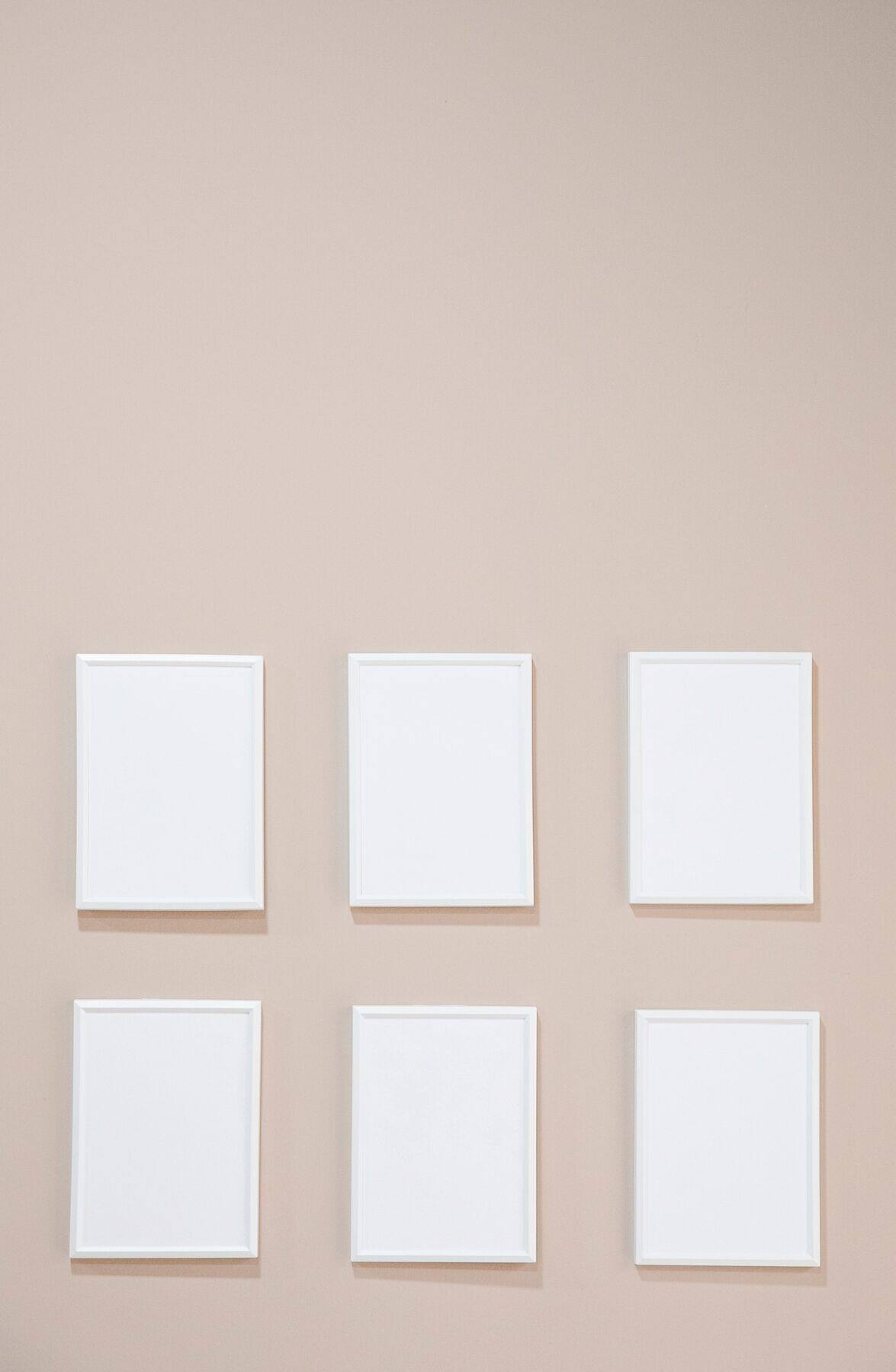 Photo: Angela Roma / Pexels
A real three-column, two-row arrangement: compare the outer edges and the repeated gaps. This photograph illustrates the layout, not the dimensions of the examples below. Photo: Angela Roma · Pexels License.
Measure the finished frames, then the group
A frame sold as 16 × 20 inches usually describes the artwork it holds. Its outside dimensions are larger. Use the finished frame’s outside width and height in every layout calculation below.
Group width = total outside widths + gaps between frames.
For example, three frames that each measure 18 inches across the outside, with two 3-inch gaps, need 18 + 18 + 18 + 3 + 3 = 60 inches of wall width. If you used the 16-inch print width instead, you would underestimate the arrangement by 6 inches.
Tape an overall rectangle above the furniture before arranging individual frames. About two-thirds of the furniture width is a useful visual starting point. Check the space from your normal seat and the doorway, then adjust for the art and room.
Choose a layout from the artwork you have
The frame dimensions in these examples are outside measurements.
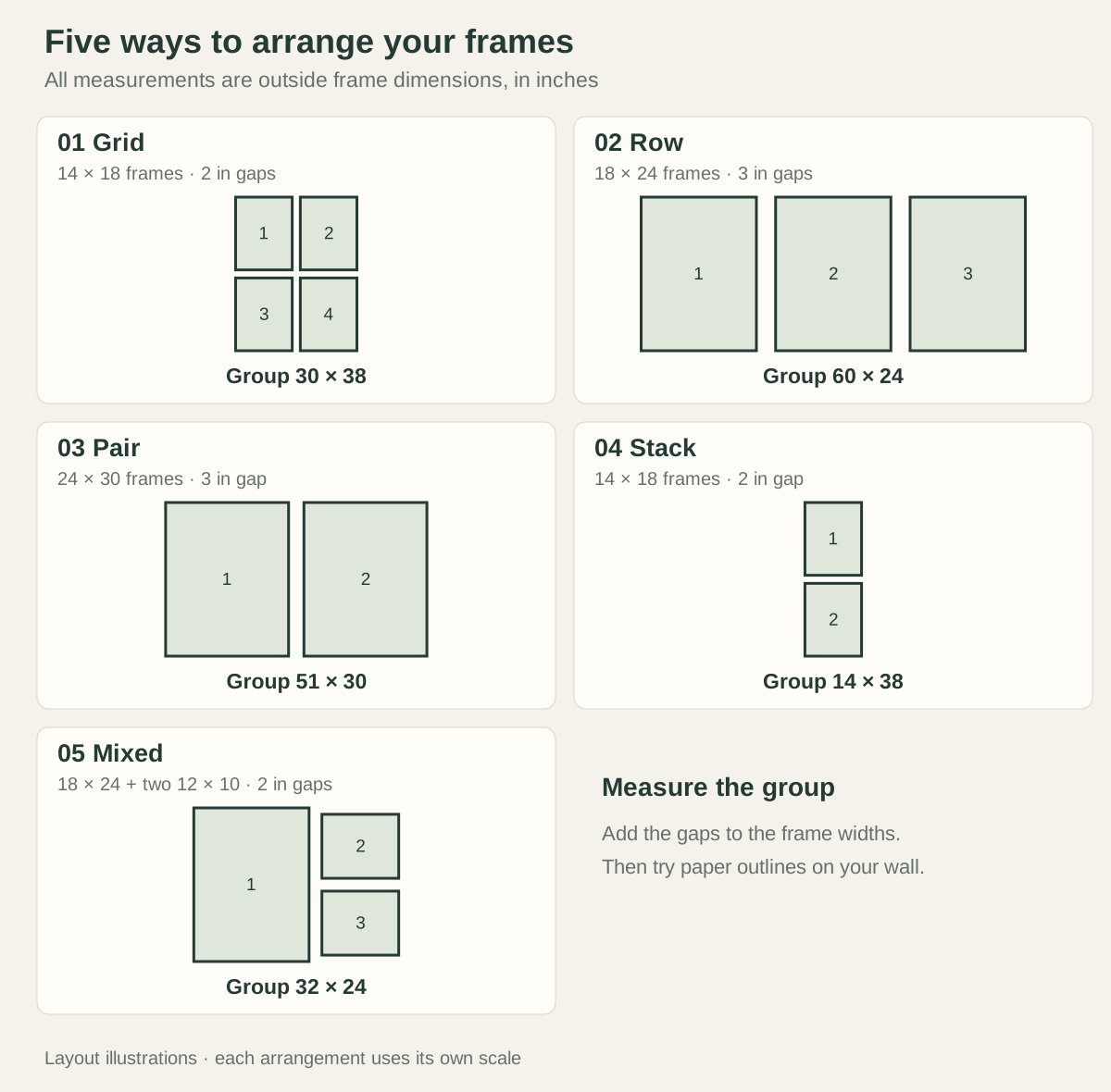 Layout and dimension illustration
A grid for a matching series
Four frames measuring 14 × 18 inches outside, separated by 2-inch gaps, make a group 30 × 38 inches. The repeated edges give a related series a clear rhythm. Check all the frame measurements: identical print sizes do not guarantee identical outer frames.
A row for a long wall
Three portrait frames measuring 18 × 24 inches outside, with 3-inch gaps, span 60 inches. Try it over a long sofa or console. If the pieces have different heights, align their centers first and compare that with top-edge alignment.
A pair when you want fewer decisions
Two frames measuring 24 × 30 inches outside, with a 3-inch gap, span 51 inches. Start here if you have two related works and a wide space. You can test the full arrangement with two paper rectangles.
A vertical stack for a narrow space
Two outside frames measuring 14 × 18 inches, with a 2-inch gap, occupy 14 × 38 inches. This suits a narrow wall section where a horizontal row would crowd a doorway.
A mixed group for a collection
The illustrated group places an 18 × 24 inch frame on the left and two 12 × 10 inch frames on the right, with 2-inch gaps. Center the right-hand stack vertically and the whole group measures 32 × 24 inches. Start with this outline, then add your actual images to judge the balance of light, dark and color.
Lay the arrangement out on the floor and photograph it straight on. Rotate or swap one piece at a time; you will see the effect of each change more clearly.
How to plan and hang a gallery wall
- Measure the wall and the furniture. Decide the overall width and height, then mark the outer rectangle on the wall with painter’s tape.
- Choose a layout and frame sizes. Add up frames and gaps to check that everything fits inside the rectangle. Our list of standard picture frame sizes helps when you are mixing sizes.
- Make paper templates. Trace each frame on kraft paper, cut it out, and mark where the hook or wire will sit.
- Tape the templates up and live with them for a day. Look from the doorway and from the sofa, and move pieces until the balance feels right.
- Hang the anchor first. Nail through the hook marks on the templates, then tear the paper away. Cut a scrap of wood to your gap width and use it as a spacer for the rest.
- Level as you go. Check each frame before moving on, since small tilts are much easier to see in a group.
Mixed frames need a few things in common
A collection gathered over years does not need identical frames to belong together. Repeating a mat color or a wood tone can give quite different pictures a connection.
Visual weight matters as much as size. A dark photograph may pull attention away from several pale drawings, even if all the frames have the same dimensions. Moving it away from one corner can change the balance more than replacing a frame.
A layout of empty rectangles can show the spacing. Seeing the actual images together reveals which picture will draw the eye first.
Test the artwork together in Frameit
Use Gallery Wall to see whether the actual images work as a group. Compare a matching frame finish with a second finish while keeping the artwork and layout consistent.
Look at how the pictures share attention. A high-contrast photograph may dominate several pale drawings even when the frames have equal dimensions. Swap positions or choose a smaller presentation for that piece before adding more decoration.
Use the preview to settle the visual arrangement. Then make paper shapes from your real frame measurements and confirm the gaps on the wall.
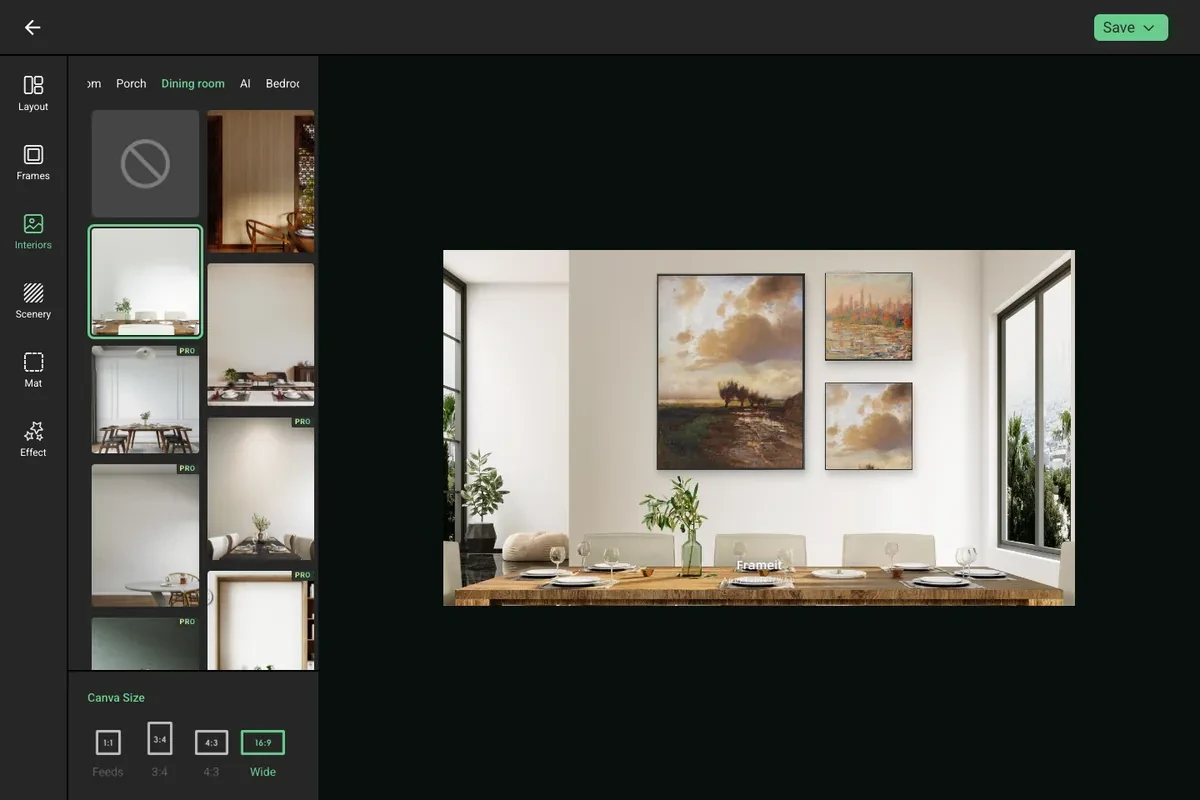 Frameit Editor