The size on a frame label usually tells you what fits inside it. An 8 × 10 frame takes an 8 × 10 print, but it occupies more than 8 × 10 inches of wall. Add a mat and the shopping gets a little less obvious.
The charts below cover the common sizes. The detail worth watching is what each number measures: the paper, the visible image or the finished frame. That is often where an apparently perfect fit goes wrong.
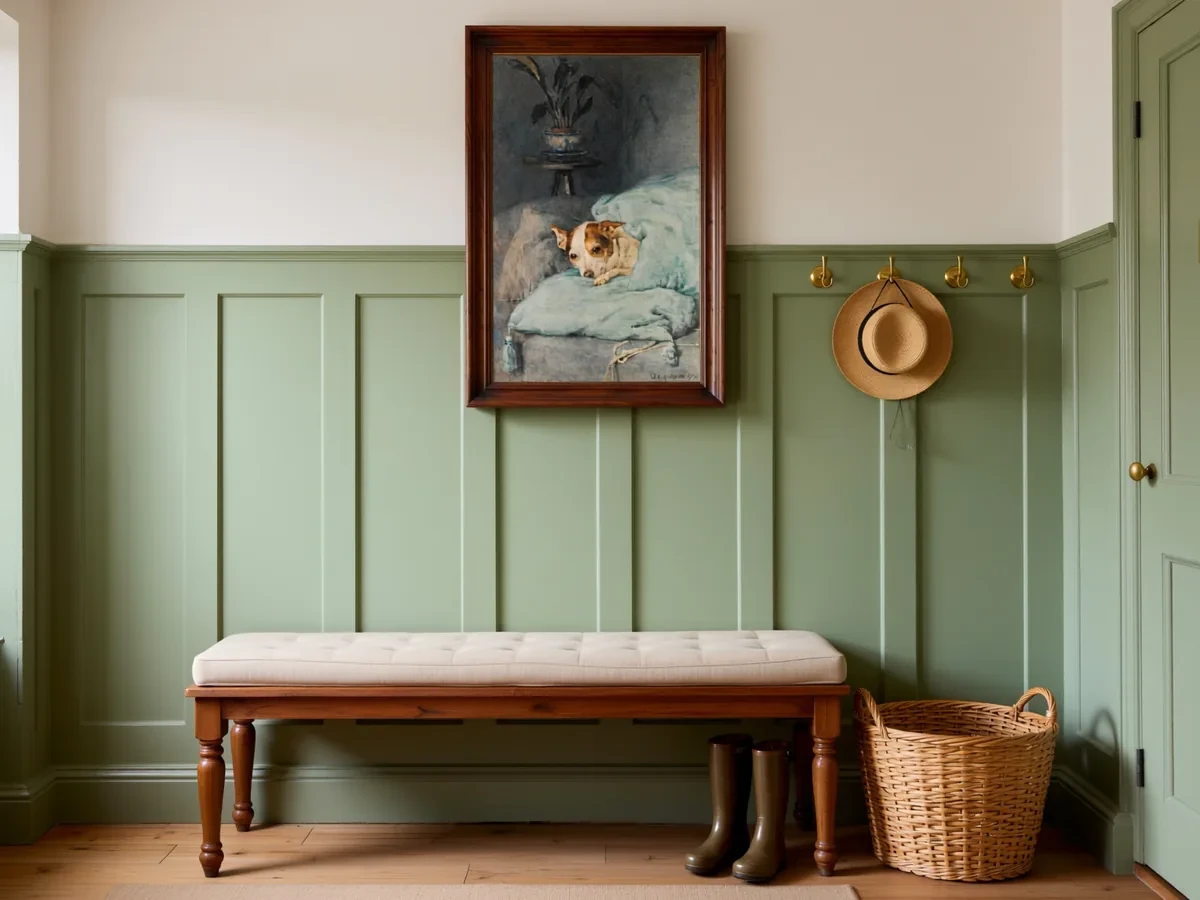 Frameit AI Create
Original artwork: Frederick George Cotman
How frame sizes are measured
A frame sold as 8 × 10 takes an 8 × 10 inch print, plus glass and a backing board. The number describes the opening at the back of the frame (framers call this recess the rabbet), not the outside dimensions.
Two things follow from that:
- The outside is bigger. Add twice the moulding width to each dimension. A 16 × 20 frame with 1-inch moulding measures about 18 × 22 inches on the wall.
- The lip hides a little of the edge. The front lip of the frame covers a thin strip around the artwork, often about 1/4 inch, so keep signatures and fine detail away from the very edge, or use a mat.
When you measure your own artwork, measure the paper and the image area separately. A print with a white border may need a mat window that shows the border, or one that covers it.
US standard frame sizes (inches)
| Frame size (in) | Size in cm | Ratio | Typical use |
|---|---|---|---|
| 4 × 6 | 10.2 × 15.2 | 2:3 | Snapshots, postcards, small desk frames |
| 5 × 7 | 12.7 × 17.8 | 5:7 | Portraits, small prints, shelves |
| 8 × 10 | 20.3 × 25.4 | 4:5 | Portraits, small art prints, a matted 5 × 7 |
| 8.5 × 11 | 21.6 × 27.9 | US Letter | Documents and home-printed artwork |
| 11 × 14 | 27.9 × 35.6 | 11:14 | Art prints, a matted 8 × 10 |
| 12 × 12 | 30.5 × 30.5 | 1:1 | Square artwork and photos |
| 12 × 16 | 30.5 × 40.6 | 3:4 | Phone photos and 3:4 artwork |
| 12 × 18 | 30.5 × 45.7 | 2:3 | Camera photos and 2:3 prints |
| 16 × 20 | 40.6 × 50.8 | 4:5 | Larger prints, a matted 11 × 14 |
| 18 × 24 | 45.7 × 61.0 | 3:4 | Posters and art prints |
| 20 × 24 | 50.8 × 61.0 | 5:6 | A matted 16 × 20 |
| 24 × 30 | 61.0 × 76.2 | 4:5 | A matted 18 × 24, large artwork |
| 24 × 36 | 61.0 × 91.4 | 2:3 | Standard poster size |
| 30 × 40 | 76.2 × 101.6 | 3:4 | Large prints and statement pieces |
The ratio matters as much as the size. A 2:3 image from a DSLR or mirrorless camera fits 4 × 6, 12 × 18 and 24 × 36 frames without cropping, but it has to be cropped or matted to fit 8 × 10 or 16 × 20. Our guide to art print sizes and aspect ratios covers this in more detail.
Metric frame sizes: A series and centimeter sizes
A-series sizes are defined by the ISO 216 standard. Every size has the same 1:√2 ratio (about 1:1.41), and each one is half the size of the one above it, so an A3 print scales down to A4 without cropping.
| Size | mm | cm | Inches (approx.) |
|---|---|---|---|
| A6 | 105 × 148 | 10.5 × 14.8 | 4.1 × 5.8 |
| A5 | 148 × 210 | 14.8 × 21.0 | 5.8 × 8.3 |
| A4 | 210 × 297 | 21.0 × 29.7 | 8.3 × 11.7 |
| A3 | 297 × 420 | 29.7 × 42.0 | 11.7 × 16.5 |
| A2 | 420 × 594 | 42.0 × 59.4 | 16.5 × 23.4 |
| A1 | 594 × 841 | 59.4 × 84.1 | 23.4 × 33.1 |
| A0 | 841 × 1189 | 84.1 × 118.9 | 33.1 × 46.8 |
Alongside the A series, frame shops in Europe and elsewhere stock centimeter sizes such as 13 × 18, 21 × 30, 30 × 40, 40 × 50, 50 × 70 and 70 × 100 cm. These are retail conventions rather than a formal standard, so check the listed opening before you order a print.
Be careful when you mix the two systems. A4 is 11.7 inches long, so it won’t fit an 8.5 × 11 frame. A3 is 16.5 inches long, so it won’t fit a 12 × 16 frame. Either buy an A-size frame or mat the print into a larger inch frame.
Which frame size to buy when you add a mat
A mat adds a border around the artwork, so the frame has to be larger than the print. The basic sum is: frame size = artwork size + 2 × mat border. These common pairings give even or nearly even borders:
| Artwork size (in) | Frame with mat (in) | Border: sides, top and bottom (in) |
|---|---|---|
| 4 × 6 | 8 × 10 | 2, 2 |
| 5 × 7 | 8 × 10 | 1.5, 1.5 |
| 5 × 7 | 11 × 14 | 3, 3.5 |
| 8 × 10 | 11 × 14 | 1.5, 2 |
| 8 × 10 | 16 × 20 | 4, 5 |
| 11 × 14 | 16 × 20 | 2.5, 3 |
| 12 × 18 | 18 × 24 | 3, 3 |
| 16 × 20 | 20 × 24 | 2, 2 |
| 18 × 24 | 24 × 30 | 3, 3 |
These borders are nominal. The mat window is cut slightly smaller than the artwork so it can hold the edges, which makes the visible border a little wider. For border widths by artwork size, see how wide a mat should be.
Read a frame label before you buy
Imagine you have an 8 × 10 print with a signature near its bottom edge. These three purchases give different results:
| Purchase | What to expect | Check before ordering |
|---|---|---|
| 8 × 10 frame without a mat | A close fit around the full sheet | Whether the frame lip covers the signature |
| 11 × 14 frame with a mat for 8 × 10 artwork | More space around the image | The mat’s actual window dimensions |
| Larger frame with a custom mat | Control over what remains visible | Paper size, image size and signature position |
“Fits 8 × 10” often describes the paper the mat is intended to hold. It does not guarantee an exactly 8 × 10 visible window. Ask for that measurement when details sit close to the edges.
For the wall, use the frame’s listed outside dimensions or measure the finished frame yourself. Two frames that both accept an 8 × 10 print can occupy different amounts of wall space. If you are building a gallery wall, that difference adds up across every row.
A preview helps you describe the frame you want
A close frame, a modest mat and a wide mat can make the same print feel like three different pieces. In Frameit, comparing those treatments around one image makes it easier to notice which one suits the work.
A wide border may give a drawing more presence; it may also leave the drawing looking distant. A narrow border can feel intimate until it starts crowding the signature. Seeing both is often enough to narrow the choice.
The saved image is useful at the framing shop. It shows the proportion you like, while your paper measurements and the actual mat opening determine whether the finished frame will fit.
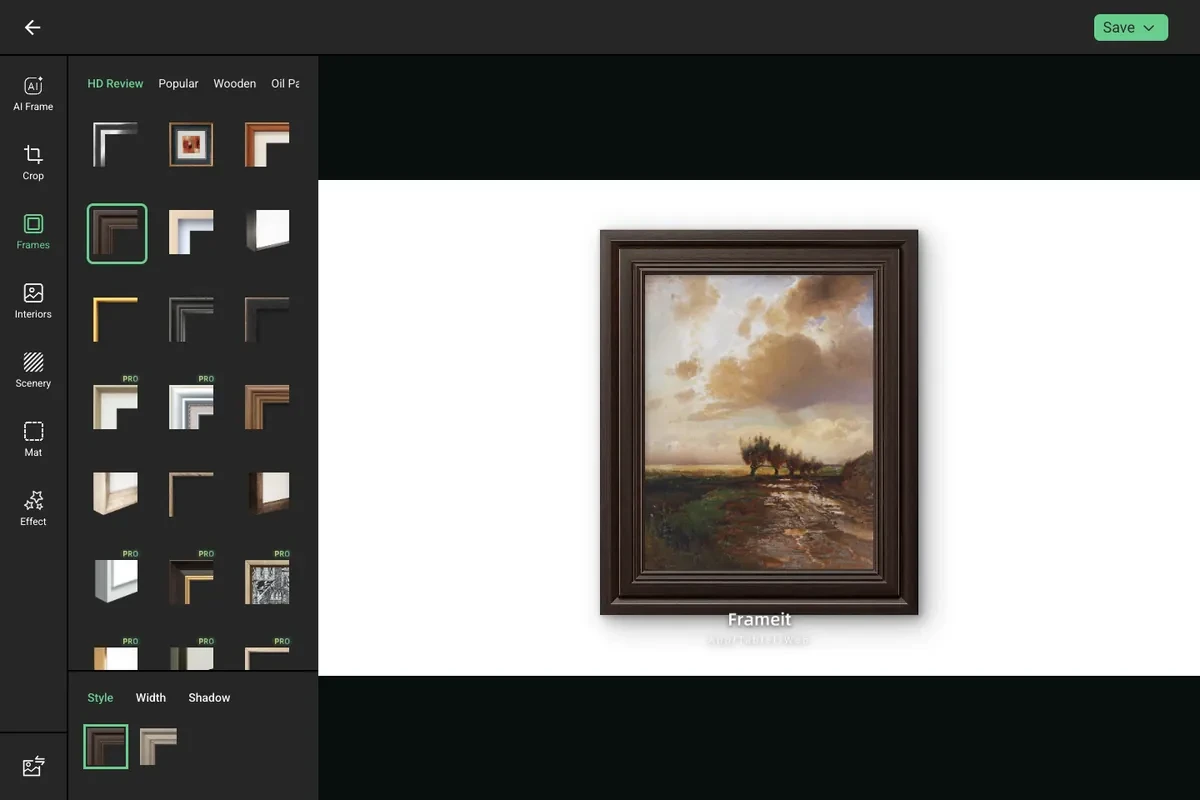 Frameit Editor