An artist bio can be short and still tell someone plenty. Your name, what you make, where you work and what you are working on now already give a reader somewhere to begin.
The artist statement has a different job. It brings the reader closer to the work: why you keep returning to that garden, what the empty chair is doing in the painting, why you leave parts of the paper bare. Those details are often more interesting than a claim about a lifelong passion for art.
 Frameit AI Create
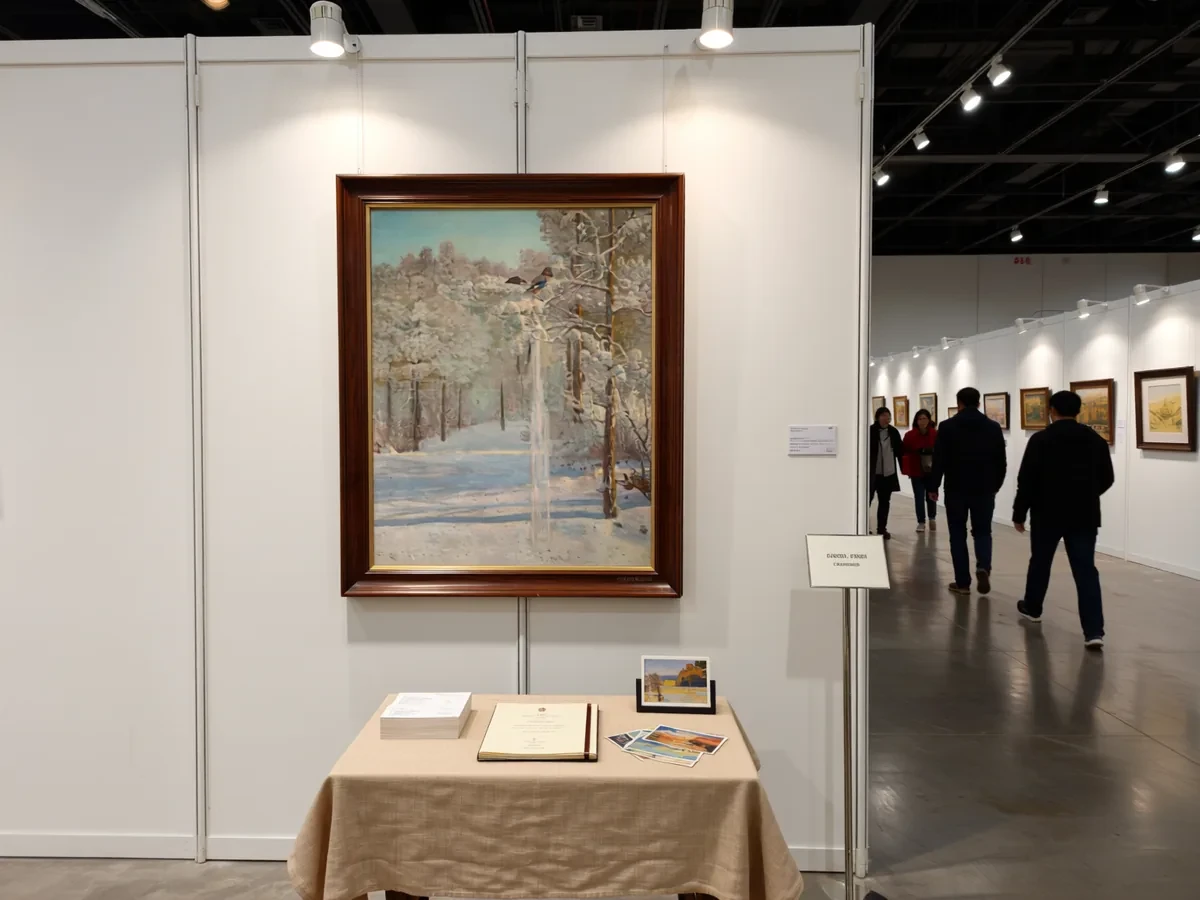
Original artwork: Józef Chełmoński
The difference at a glance
The quickest test: a bio is about you, a statement is about the work. If a sentence would still be true after you switch to a new series, it probably belongs in the bio.
| Artist bio | Artist statement | |
|---|---|---|
| Answers | Who is this artist? | What is this work about? |
| Point of view | Usually third person (“[Your name] paints…”) | Usually first person (“I paint…”) |
| Common length | One line to one paragraph, often 50 to 150 words | One to three paragraphs |
| Content | Medium, location, training, selected highlights, current work | Subjects, ideas, materials, process |
| Tone | Factual | Personal but specific |
| Used in | Etsy shop About section, website, press, show labels | Applications, exhibitions, series pages, portfolio |
| Update when | Your career changes | Your body of work changes |
A bio can begin with ordinary facts
Your medium and recurring subjects are useful information. So are the place you work and the series you are making now. A reader does not need a prize or a gallery name in every sentence to understand your practice.
For text that a gallery or fair will publish, third person makes it easy to reuse: “Lena Ortiz paints…” On your own site, first person can sound more at home. The facts can stay the same.
If you have relevant exhibitions, commissions or training, choose a few. If you are early in your practice, the current work can carry the paragraph. A short bio with concrete detail is already doing its job.
A complete bio, including an early-career version
The artist below is fictional, created to show the difference between useful detail and empty praise.
Short bio
Lena Ortiz is a watercolor artist based in Portland, Oregon. She paints the plants and small objects she finds on neighborhood walks, using muted greens and the unpainted surface of the paper. Her current series follows the same garden through a year of changing light. She sells original watercolors and prints through her studio shop.
The bio tells us where she works, what she paints and what connects the current series. It does not need an invented award or a sentence about international collectors.
One-line version
Lena Ortiz paints quiet watercolors of neighborhood gardens and everyday objects.
For your own bio, write four facts first: your name, medium, recurring subject and current work. Add training or selected exhibitions only where they help explain your practice. A short, accurate bio is complete even without those credits.
Write about the choices inside the work
An artist statement gets more interesting when it stays close to a particular body of work. Why does that window keep returning? Why are the figures so small? What changed when you switched from smooth paper to rough?
The answer can be modest. Returning to the same garden each week, leaving an area unpainted, or working from a remembered room gives someone a way to look again. You don’t have to explain everything a viewer might feel.
It helps to write with the work in front of you. A sentence that points to something visible or to a real decision in the making gives the reader more than a claim that the art is unique.
A statement that gives the viewer something to notice
Here is a fictional statement for the same artist:
I paint the garden on my street just before the houses cast their afternoon shadows. Returning to the same place lets me notice small changes: a branch cut back, a flower replaced by seed, a pot moved toward the light. I leave parts of the paper unpainted so those gaps can carry the brightness of the scene. Seen together, the paintings follow a familiar place becoming slightly different each week.
The statement gives the reader a way into the paintings: recurring visits, small changes and unpainted paper.
Compare that with “My work explores the beauty of nature through a unique visual language.” The more specific version lets someone point to an actual choice in the image.
Try this edit on your own draft: underline every sentence that could describe hundreds of other artists. Replace one with a material choice, an observation or a moment from the making. Keep only details that are true.
Where to use each one when you sell online
| Place | Use |
|---|---|
| Etsy shop About section | First-person short bio, plus one paragraph of statement |
| Etsy listing description | The two-sentence listing version |
| Website About page | Bio and statement as two labeled sections |
| Instagram profile | One-line bio |
| Open calls and grants | Whatever they ask for, at the length they ask for |
| Press kit or fair catalog | Third-person short bio |
| Packaging insert | One-line bio and your shop link |
Applications often set strict word counts, so trim to fit rather than squeezing in more. If you are opening a shop, How to sell art on Etsy shows where the About section fits in the setup.
Let the work supply the detail
If the statement discusses pale washes and untouched paper, choose a photograph where those areas are visible. If it describes a subject changing across a series, place two or three of those works together.
Read the text once more beside the images. When a sentence could describe almost any artist, try replacing it with a choice visible in this particular work. For an application, then prepare the image count, dimensions and artwork details requested by the recipient.